Banana Box frogs
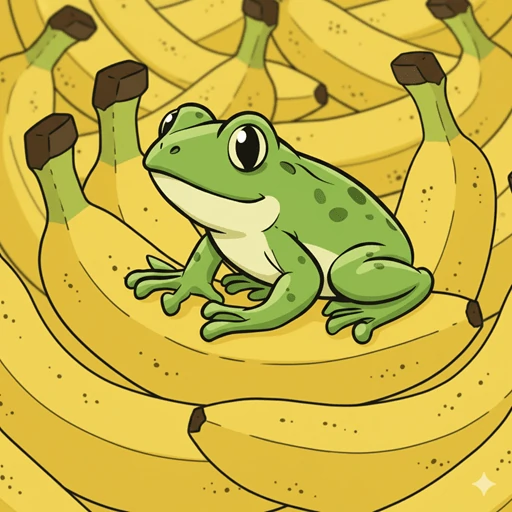
Each year it is estimated that upwards of 50,000 frogs of assorted species are accidentally transported around the country in produce and plants. Some reports put the numbers for Victoria at around 6000-8000 frogs per year!
Most of these frogs are coming from northern New South Wales and Queensland. While a good number arrive in bananas (hence the name "Banana Box Frogs"), many are transported on other types of fruits and vegetables destined for supermarkets and green grocers, as well as plants for nurseries and in flowers for florists.
Don't release them
- Surveys have shown that many of these frogs that are found are simply released into surrounding areas. This is not an ideal situation for a number of reasons.
- Many of the species of frogs that are transported are from warmer climates and will not survive a cold Victorian winter.
- Releasing frogs into an environment can assist in the spread of diseases such as Chytrid fungus.
- The frogs may be unwell and injured after being transported. They may require veterinary care to get them well again.
- Several of the species of frogs that are most often transported are not native to Victoria. There are reports of released frogs forming feral populations in the areas that they were let go.
What Species?
There are a number of different species of frog that are transported. Below are some details about three of the most common species we see through Homeless Herps.
Dainty Green tree frog (litoria gracilenta)
Also known as the graceful tree frog, this medium-sized species reaches up to 4.5 cm in body length. It displays a vibrant lime-green or olive-green coloration on its back, contrasting with bright yellow sides, belly, and upper limbs. A slender pale green or yellow stripe runs from the nostril over the eye, while the iris is a distinctive orange and the pupil is horizontal. The backs of the thighs may appear purple or reddish-brown, and its hands and feet are marked by large discs and bright yellow coloring. The fingers are three-quarters webbed, while toes are fully webbed, allowing excellent climbing ability.
This attractive frog is distributed along the eastern coast of Australia, ranging from Cape York in far northern Queensland down to Sydney in New South Wales. Litoria gracilenta thrives in moist forests, woodlands, and suburban gardens, seeking cover during hot days and emerging after rain to forage.
This attractive frog is distributed along the eastern coast of Australia, ranging from Cape York in far northern Queensland down to Sydney in New South Wales. Litoria gracilenta thrives in moist forests, woodlands, and suburban gardens, seeking cover during hot days and emerging after rain to forage.

Green Tree Frog (Litoria caerula)
The Australian Green Tree Frog, is a relatively large, robust species, commonly reaching 7–11 cm snout–vent length, with females typically larger than males. Adults have smooth, often bright to emerald green skin that can vary from bluish to olive or khaki, sometimes marked with scattered small white or pale spots along the back and flanks, and a creamy white to pale yellow belly. The frog has a broad head with a rounded snout, conspicuous glands on the area of the head behind the eyes and a fleshy fold over the visible ear drum, large adhesive toe discs with fingers partially and toes mostly webbed, and golden eyes with a horizontal pupil.
This species occurs widely across northern and eastern Australia, including much of Queensland, the northern half of the Northern Territory, the Kimberley region of Western Australia and most of New South Wales, extending from coastal areas into drier inland regions; it is absent from Tasmania and most of Victoria. Litoria caerulea occupies warm, humid environments such as tropical and subtropical forests, woodlands, swamps, and wetlands but frequently using human structures like houses, water tanks, and letterboxes as shelter, provided there is access to water for breeding.

Eastern Dwarf Tree Frog (litoria fallax)
The Eastern dwarf tree frog is a very small, slender frog typically around 2–3 cm in body length, with females generally larger than males. Colour is highly variable from bright green through bronze or fawn, often with a narrow bronze stripe from snout through the eye along the flank on green-backed animals, or irregular green patches on bronze-backed individuals; the belly is white and granular, males have a yellowish throat, a distinct white stripe runs from under the eye to the arm, and the groin and anterior thighs are usually bright orange, with small toe pads and toes about three-quarters webbed.
This species is widespread along the east coast and adjacent ranges of Australia from northern Queensland south into New South Wales, with additional translocated or introduced populations recorded around Melbourne. Litoria fallax typically occupies dense emergent or fringing vegetation such as reeds, sedges and floating plants around still or slow-moving water in swamps, farm dams, lagoons, ponds and quiet creek margins, and readily uses suburban gardens and artificial water bodies where suitable cover and permanent or semi-permanent water are available for breeding.

Found A Frog?
- If you find a frog here is what to do:
- Find a clean container that has no chemical residues in it. An ice-cream or take away food container is perfect. Make some air holes in the lid.
- Place a piece or two of damp paper towel on the bottom of the enclosure. Place a small cutting of a plant with leaves to give the frog something to hide in.
- Put the frog in the container and secure the lid.
- Do not worry about providing any heat or food. The frog will be fine for a few days.
- Call Wildlife Victoria on (03) 8400 7300 or your local wildlife organisation/shelter if known. They will organise a registered wildlife carer to get the frog from you or tell you where to take it. Ultimately the frog will be transported to Homeless Herps to be assessed and hopefully rehomed.